If you’re searching for the right time to schedule tree pruning Sheffield homeowners rely on, timing matters just as much as technique. Prune at the wrong time of year and you can stress a tree, trigger disease, or reduce next season’s blossom. Get the timing right and you’ll keep your garden safe, tidy and thriving all year round.
In this guide, our qualified arborists at Tree Service Sheffield break down exactly when to prune, trim and pollard the trees on your property — and why hiring a local, insured tree surgeon matters more than most people realise.
Why Timing Matters for Tree Health
Every species responds differently to cutting. Prune a flowering tree too early and you may remove next year’s buds. Cut an oak or a beech in high summer and you increase the risk of pests and fungal infection getting into fresh wounds. Sheffield’s cool, damp climate — sitting at the edge of the Peak District — makes correct timing even more important, since damp conditions can accelerate fungal spread on open cuts.
The Dormant Season: Late Autumn to Early Spring
For most deciduous trees across Sheffield, Rotherham, Barnsley and Chesterfield, the dormant season (roughly November to March) is the safest window for major pruning, crown reduction and structural work. With no leaves on the branches, our arborists can clearly see the tree’s structure, identify deadwood, and make precise cuts that heal quickly once spring growth resumes.
- Lower risk of disease transmission (many fungal spores are less active in cold weather)
- Better visibility of branch structure for precision cuts
- Less stress on the tree, since sap flow and energy demand are lower
- Ideal window for larger jobs like crown reduction and deadwooding
Tree Pollarding: Best Practice for Sheffield Gardens and Streets
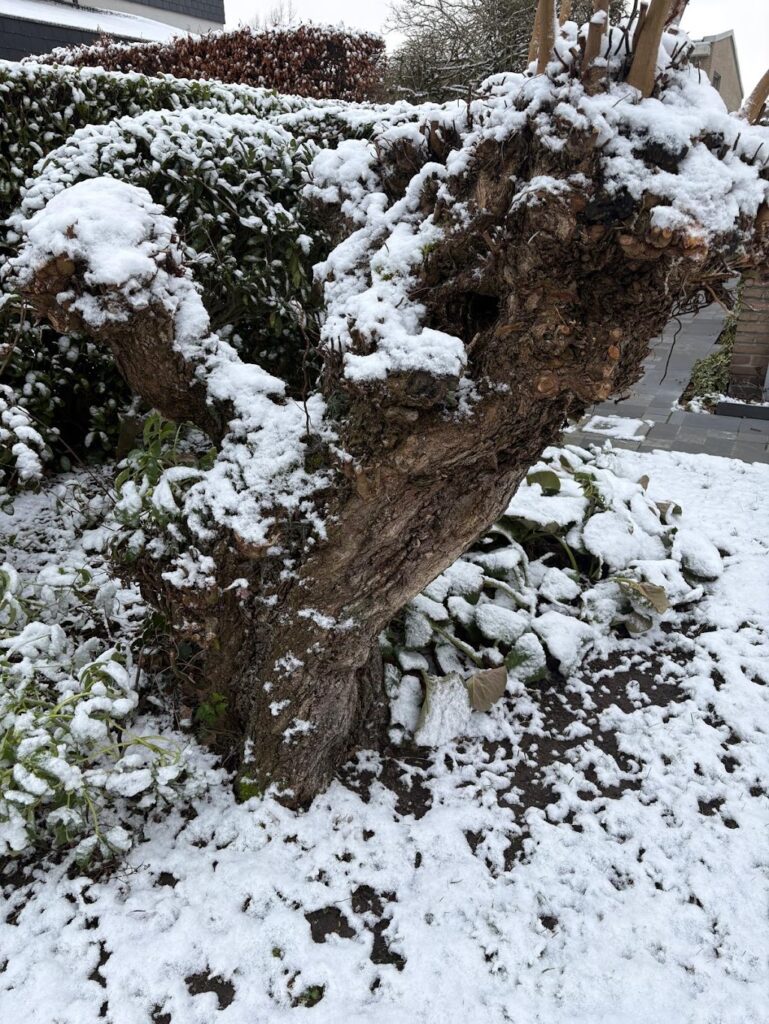
Pollarding is a specific pruning technique used to control the size of fast-growing species such as willow, lime, sycamore and plane trees — common across Sheffield’s older gardens and green spaces. It should always be carried out in late winter, before the growing season begins, and then maintained on a yearly cycle to keep the tree healthy and well-shaped.
Our dedicated Tree Pollarding service covers assessment, timing advice and ongoing maintenance for gardens across Sheffield and South Yorkshire, while our Tree Trimming & Pruning team handles everything from light shaping to full crown reduction.
Spring and Summer: What You Can Still Safely Do
Not everything needs to wait for winter. Light formative pruning, hedge trimming and the removal of dead, dying or dangerous branches can — and should — happen any time of year if there’s a safety risk. Ornamental spring-flowering trees like cherry and magnolia are usually best pruned immediately after flowering, rather than in winter, so you don’t cut off next year’s blooms.
- Spring-flowering trees: prune right after flowering finishes
- Hedges and shrubs: light trims through spring and summer to maintain shape
- Dead, diseased or dangerous limbs: remove immediately, any season
- Fruit trees: late winter for structure, summer for restricting vigorous growth
Trees You Should Never Prune Yourself
Large or mature trees, anything near power lines, and any tree close to a building should always be assessed by a qualified professional. Incorrect pruning can cause long-term structural damage, encourage decay, or create a genuine safety hazard for you and your neighbours.
Local Considerations for South Yorkshire Gardens
Sheffield’s mix of exposed hillside gardens, sheltered suburban plots and semi-rural properties around Stocksbridge, Dronfield and Bradfield each bring different pruning challenges — from wind exposure to soil type. Our team assesses each tree on-site before recommending a pruning schedule, rather than applying a one-size-fits-all approach.
Frequently Asked Questions
Can I prune trees in my Sheffield garden in summer?
Light maintenance, hedge trimming and removal of dead or dangerous branches are fine year-round. Major structural pruning and pollarding are best left to the dormant season (late autumn to early spring).
How often should trees be pollarded?
Once a tree has had its initial pollard, it typically needs re-pollarding every 2-5 years, depending on species and growth rate, to maintain shape and control size.
Do I need permission to prune a tree in Sheffield?
If your tree is covered by a Tree Preservation Order (TPO) or sits within a conservation area, you’ll need council permission before any work. Our team can check this for you and handle the paperwork.
How much does tree pruning cost in Sheffield?
Cost depends on the size, species, condition and accessibility of the tree. Contact us for a free, no-obligation written quote.
Get a Free Quote From Sheffield’s Trusted Tree Surgeons
Tree Service Sheffield offers fully insured, LANTRA/NPTC-certified tree surgery across Sheffield, Rotherham, Barnsley, Chesterfield, Worksop and South Yorkshire. Call our team today on 0114 697 3325 or request a free written quote online — no obligation, fast response.
Backlink & Off-Page SEO Opportunities for This Article
Once this post is live on the blog, use it to earn genuine external backlinks and local citations. Recommended outreach targets for this specific topic:
- Submit the guide link to Sheffield gardening and homeowner Facebook groups and community forums (with genuine, non-spammy participation)
- Reach out to South Yorkshire gardening bloggers and local lifestyle websites offering a guest contribution with a link back to this article
- List the business (with a link to this post as a resource) on local directories: Yell, Checkatrade, Rated People, MyBuilder and Thomson Local
- Share via the Google Business Profile posts feature to support local map-pack rankings
- Approach Sheffield-based gardening centres or landscaping companies for a reciprocal resource-page link