A Complete Guide for Homeowners, Developers & Tree Surgeons Across South Yorkshire
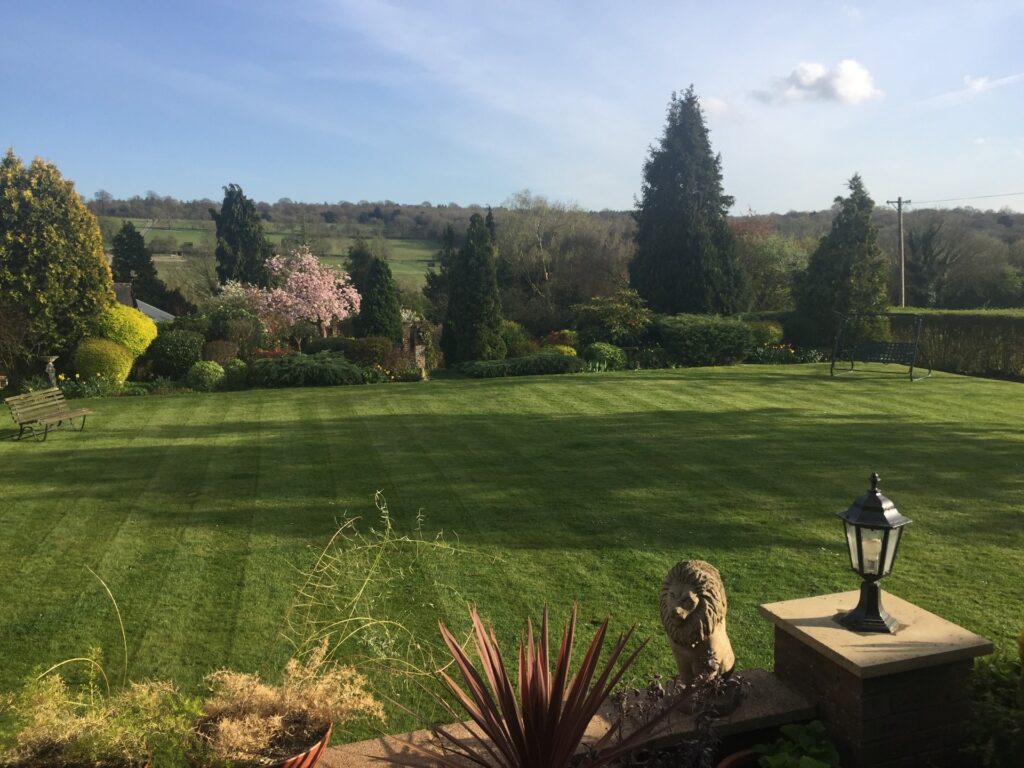
Sheffield has a well-earned reputation as one of the greenest cities in the UK. With more than four million trees woven into its streets, parks, private gardens, woodland edges, and surrounding countryside and with the Peak District National Park practically on its doorstep it is a city that takes its tree cover seriously. That is something local residents and property owners should be proud of. Trees shape Sheffield’s identity, improve air quality, support biodiversity, reduce urban heat, and add enormous visual character to the city’s neighbourhoods.
But being a green city also means there are clear legal responsibilities when it comes to tree surgery in Sheffield, and the consequences of getting it wrong can be significant. Many homeowners assume that if a tree stands on private land, they are free to trim, reduce, or remove it as they choose. In reality, that is often not the case.
Whether you are a homeowner with an overgrown oak at the bottom of your garden, a landlord managing rental properties, a business owner responsible for commercial grounds, or a developer planning site clearance, understanding the legal framework around tree work is essential before any chainsaw leaves the van.
This guide explains what you need to know before carrying out tree surgery in Sheffield, including Tree Preservation Orders, conservation area restrictions, emergency exemptions, and how to apply for permission correctly.
What is a Tree Preservation Order and could one apply to your tree?
A Tree Preservation Order, usually referred to as a TPO, is a legal protection placed on a specific tree, a group of trees, or even entire woodland areas by the local planning authority. In Sheffield, that authority is Sheffield City Council: https://www.sheffield.gov.uk/planning-development/conservation-design/tree-works-protected-trees/tree-preservation-orders-application-works
Once a TPO is in place, it becomes a criminal offence to cut down, top, lop, uproot, wilfully damage, or destroy that tree without first obtaining written permission from the council. This applies even if the tree is located entirely within your own garden.
TPOs are generally placed on trees that provide strong public amenity value. This often includes mature street trees, large specimen trees visible from public spaces, trees that form part of a historic landscape, or woodland areas that contribute to local biodiversity and habitat protection.
In Sheffield, protected trees can be found across residential districts, parklands, and conservation zones throughout the city. Areas such as Hillsborough Park, Endcliffe Park, the Rivelin Valley, and the historic streets of Nether Edge are all known for significant protected tree coverage.
Work that commonly requires TPO permission includes:
- Full tree removal or felling
- Crown reduction or crown thinning
- Pollarding or major reshaping
- Heavy pruning or significant branch removal
- Root disturbance during construction work
- Any work that would materially alter the tree’s form, health, stability, or long-term structure
Even seemingly routine work can require approval if the tree is protected. Many disputes arise because property owners assume “light pruning” falls outside regulation when it often does not.
To check whether your tree is protected, you can use Sheffield City Council’s online TPO and conservation area map or contact their planning department directly. A qualified arborist in Sheffield can also carry out a site inspection and confirm TPO status before any work begins.
Sheffield City Council Map of conservation areas and TPOs
What are the relevant laws?
Tree Preservation Orders are not simply council guidelines—they are backed by national legislation.
The law governing TPOs is primarily found in Part VIII of the Town and Country Planning Act 1990, alongside the Town and Country Planning (Tree Preservation) (England) Regulations 2012, which came into force on 6 April 2012.
Further amendments were introduced through Section 192 of the Planning Act 2008, which allowed certain provisions from older TPOs to be transferred into updated regulations. In addition, Part 6 of the Localism Act 2011 amended Section 210 of the Town and Country Planning Act 1990, particularly regarding time limits for legal proceedings related to breaches of TPO regulations.
In practical terms, this means unauthorised work on a protected tree can lead to prosecution, substantial fines, and a legal requirement to plant a replacement tree. In serious cases involving deliberate destruction, the financial penalties can be significant.
The law is designed not only to protect individual trees, but also to preserve the wider environmental and visual character of communities across Sheffield.
Tree Preservation Order regulations: https://www.legislation.gov.uk/ukpga/1990/8/part/VIII
Living in a conservation area? The rules are different and equally important
Even if your tree does not have a specific TPO attached to it, it may still be legally protected if your property sits within a conservation area.
Sheffield has a number of designated conservation areas covering historic and architecturally significant neighbourhoods, including parts of Nether Edge, Broomhill, Ecclesall, Crookes, and Hillsborough. These areas are protected because of their architectural heritage, historic character, and landscape value—and mature trees are often a major part of that identity.
If you live within one of these areas, you must give Sheffield City Council at least six weeks’ written notice before carrying out works on a tree with a trunk diameter greater than 75mm, measured at 1.5 metres above ground level.
This is sometimes called a Section 211 Notice.
The six-week notice period gives the council time to assess whether the tree should receive formal TPO protection before work begins. During that period, the council may allow the work to proceed, request changes, or place a new Tree Preservation Order on the tree.
Skipping this step—even for what feels like minor maintenance—can still result in enforcement action, fines, and a requirement to replace the tree at your own expense.
Many homeowners are surprised to discover that conservation area protection applies automatically, even when there is no obvious sign or marker on the property itself.
Sheffield City Council conservation areas page: https://www.sheffield.gov.uk/planning-development/make-application-works-trees/trees-conservation-areas
When you don’t need permission and when you think you don’t but actually do
There are limited circumstances where tree work can be carried out without prior consent. If a tree is genuinely dead, you may be able to remove it without a formal TPO application but you must still give the council at least five working days’ written notice, and you should have photographic evidence ready to confirm the tree’s condition. Sheffield City Council can be contacted at protectedtrees@sheffield.gov.uk for these notifications.
If a tree poses an immediate and serious danger to life or property, emergency work can be carried out without prior consent. However, you must notify the council as soon as possible afterwards and provide evidence of the hazard that justified the work.
One of the most common mistakes homeowners make is assuming that “minor” work doesn’t count as regulated. In practice, if a TPO applies, most significant interventions require approval. When in doubt, always check before you instruct anyone.
How to apply for TPO permission in Sheffield
If your tree is protected, you’ll need to submit a formal application through the Planning Portal before any work starts.
A solid application includes a clear description of the proposed works, a written justification, photographs, and where the work is significant an arboricultural report from a qualified professional.
Sheffield City Council typically makes a decision within eight weeks. If approved, you can proceed with a qualified tree surgeon. If refused, you have the right to appeal.
Storm damage and emergency tree work in Sheffield
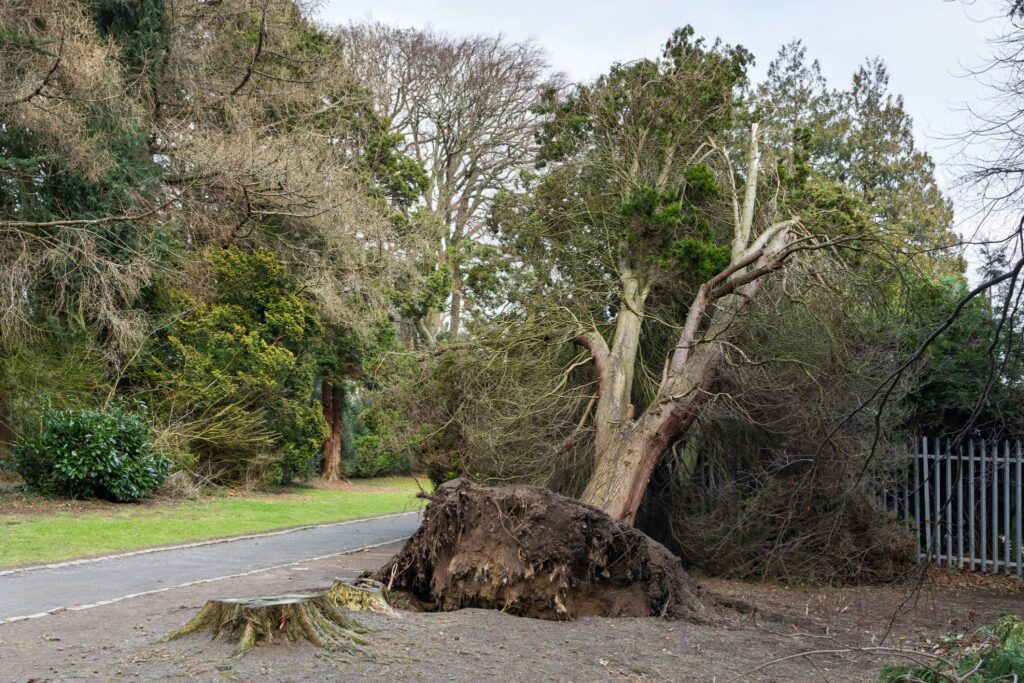
Sheffield’s geography particularly in more exposed areas like Oughtibridge, Worrall, Stocksbridge, and the rural fringes bordering the Peak District means storm damage is a recurring reality. High winds can destabilise large trees, bring down major limbs, or create sudden hazards with very little warning.
In these situations, having access to a qualified emergency tree surgeon available around the clock is invaluable. Speed matters, but so does documentation. A professional team will respond quickly, make the tree safe, and keep a full written and photographic record of the emergency.
For property owners in the wider region including those in Sheffield and the South Yorkshire area the same standards apply. Whether it’s a fallen tree blocking a driveway after a storm, a dangerous limb overhanging a road, or a tree leaning toward a building following severe weather, professional emergency tree removal services in Sheffield are available to respond quickly, safely, and in full compliance with local council requirements.
Protecting Sheffield’s trees, and protecting yourself
The rules around tree preservation in Sheffield exist for good reason. The city’s identity, its biodiversity, and the character of its neighbourhoods are all shaped by its remarkable tree cover. When the process is followed properly, it doesn’t need to be complicated or stressful, it’s simply a matter of checking before you act and working with qualified professionals who know the system.
Whether you need a TPO application handled, a full tree survey carried out, stump removal in Sheffield completed safely, or urgent help after a storm, always start with a qualified and insured local arborist. And when emergencies strike whether you’re in Sheffield, South Yorkshire or North East Derbyshire knowing that 24/7 emergency tree services are on hand gives you real peace of mind when it matters most.