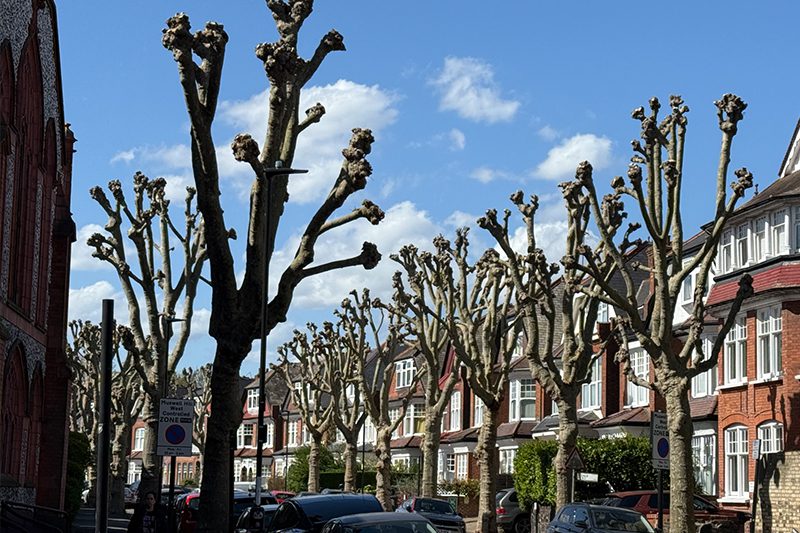
Tree pollarding is a specialist pruning technique that professionals use to control the size and height of a tree, allowing arborists to keep it smaller than it would naturally grow over time.
It is also one of the most severe pruning methods available. During the process, arborists remove the upper branches while retaining the tree’s main structural framework. When trees undergo pollarding on a regular cycle, they form distinctive knuckles, often called knobs, at the ends of their remaining limbs. Consequently, this method is commonly used to manage trees in urban areas across Sheffield.
There are several situations where pollarding trees may be necessary, and we outline some of the most common reasons below.
– To prevent a tree from outgrowing its surrounding environment.
– To reduce the amount of shade produced by the tree.
– To stop branches from interfering with overhead wires.
– To prevent trees from blocking street lights, signs, or motorists’ and pedestrians’ field of vision.
– To allow the safe and unrestricted passage of vehicles.
– To help limit excessive root growth.
– To improve airflow and overall air circulation.
-To reduce the accumulation of leaf and twig debris.